
Commercial vs. Farmland Which Offers Better Long-Term Returns?
It often begins as a passing thought rather than a clear decision. Someone notices how many office buildings sit half-lit at night. Someone else mentions a piece of land their uncle bought years ago, now surrounded by development. Nothing sounds urgent, but the idea stays. Which of these actually holds value when time stretches out? Comparing commercial vs farmland investment feels simple on the surface, yet the longer it’s considered, the less obvious it becomes. One option looks active and modern. The other looks slow and almost forgotten. That contrast pulls people in different emotional directions before logic has much of a chance.
How This Topic Appears In Everyday Life
This topic shows up when people stop thinking short-term without realizing it. It comes up after years of steady work, when savings start to feel like something that should be protected, not chased. It appears during family discussions where everyone has heard one success story and one warning story, and neither feels complete. In growing cities, the conversation becomes more specific. Around expanding areas like Hyderabad, farmland keeps appearing on the edge of awareness. Not because people want to grow crops, but because roads and layouts keep getting closer. That’s how farmland investment in Hyderabad slips into real conversations, quietly and without urgency.
Where Most People Feel Stuck
The stuck feeling usually isn’t about choosing returns. It’s about choosing a type of responsibility. Commercial property looks busy. There are tenants, agreements, maintenance, conversations. Something is always happening, and that activity feels reassuring. Farmland offers almost the opposite experience, long stretches of nothing, no rent cycles, no visible proof that the investment is alive. That silence can feel uncomfortable, especially for people used to measuring progress frequently. There’s also fear around making a mistake, like access roads, legal boundaries, future zoning. These details sound heavy, even when they’re not unusual. Commercial property feels more familiar, even when it’s actually more fragile.
What People Assume Will Perform Better
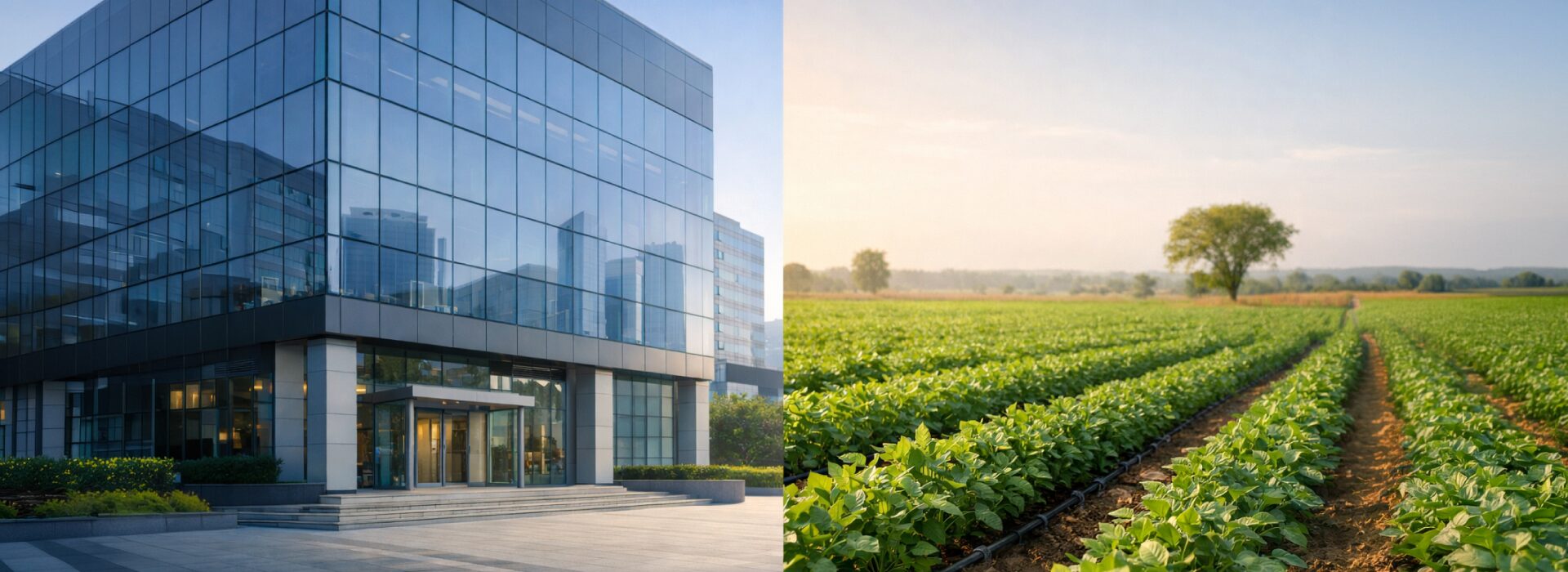
Commercial property carries a certain image. It looks like progress like glass, concrete, signage. The assumption is that businesses will always need space and that rent will keep flowing as long as the building exists. But this assumption depends on many things staying stable, like tenant demand, economic conditions, work patterns, or a space that feels essential today can feel unnecessary surprisingly fast. Farmland is often assumed to be slow money. Something that only works if someone forgets about it entirely. That assumption misses how often farmland changes purpose without changing owners.
What Actually Works
Farmland rarely makes noise. That’s part of why it’s underestimated. Land doesn’t wear out. It doesn’t need updates to stay relevant. It doesn’t compete with trends. Over time, farmland benefits from forces that don’t ask permission, like population growth, infrastructure projects, and urban expansion. What starts as agricultural land slowly gains new context. Appreciation doesn’t rush, but it accumulates. The farmland investment benefits aren’t flashy. Costs remain low. Decisions are infrequent. The land just sits there, absorbing value from everything growing around it. At Vaayu, we’ve seen firsthand how well-chosen farmland around Shankarpally grows quietly in value, supported by planned access, clear documentation, and the steady push of Hyderabad’s expanding infrastructure. We focus on locations where patience is naturally rewarded.
The Emotional Difference That Exists
There’s a mental weight that comes with managing something active. Commercial property requires attention, even when things are going well. Tenants leave, repairs appear, and negotiations repeat. Farmland demands almost nothing emotionally. That lack of involvement can feel boring, but it also creates space. For many, that quiet ownership becomes a form of relief they didn’t know they wanted. Over long periods, emotional sustainability matters. An investment that doesn’t drain attention is easier to hold. Holding longer often matters more than timing perfectly.
Why Farmland Feels Riskier Than It Often Is
Farmland feels risky because it doesn’t offer regular confirmation. No monthly income means no reassurance. People are left with trust in time, which isn’t easy. But once location and legal clarity are handled, farmland stays consistent. It doesn’t react to market moods. It doesn’t depend on occupancy rates. Its value is tied to land itself, not usage. In places like Hyderabad, farmland has shown how patience quietly aligns with growth. The changes arrive slowly, then suddenly feel obvious. We address these fears at Vaayu by offering legally verified farmland with proper road access and long-term development vision, so our investors don’t have to rely on guesswork or blind patience. Our role is to remove uncertainty while letting time do its work.
The Less Visible Risks In Commercial Property
Commercial investments can work well, but they depend on constant alignment. Demand has to stay strong. Businesses have to survive. Areas have to remain relevant. Vacancy changes everything. A single empty unit can turn confidence into concern. These risks don’t show up at the beginning, when buildings look full and projections look clean. Farmland doesn’t offer speed, but it also doesn’t surprise owners often. That predictability is easy to overlook.
Where Land, Care, and Community Come Together- Vaayu
At Vaayu, we don’t see farmland as just an asset on paper. We see it as a space meant to be lived with, cared for, and grown into over time. That’s why our farmlands in Shankarpally are planned with wide internal roads, underground electrical cabling, and drip irrigation that supports both sustainability and ease. We take care of maintenance for the first three years so owners can settle in without pressure. Surrounded by fruit orchards, open green spaces, and thoughtfully designed amenities, we’ve created a setting where investment feels calm, practical, and deeply connected to nature, without losing access to Hyderabad’s growing corridors.
Final Words
Choosing between commercial property and farmland usually says more about patience than strategy. Some people want movement and feedback. Others are comfortable letting value grow without watching it closely. The confusion comes from expecting both to behave the same way. Commercial property responds to attention. Farmland responds to time. Neither option announces success while it’s happening. The clarity usually comes much later, when the decision no longer feels recent, and the results quietly speak for themselves.
FAQs
Farmland often delivers steady appreciation, passive income, and inflation protection, while commercial property offers higher volatility and market-dependent long-term returns.
Farmland tends to be more stable due to demand, limited supply, lower vacancy risk, and reduced exposure to economic cycles.
Farmland suits first-time investors seeking lower risk, diversification, long-term growth, and simpler management compared to complex commercial investments overall portfolios.